
Leadership Results Boil Down to 3 Paths
I’ve been in formal leadership roles for over 35 years and have learned a great deal about myself, others, and organizational dynamics in that time. The title of this article may seem like click-bait, but it’s true: leadership results come down to one of three things the leader does. In short: make good decisions, undo the bad ones when you can, and learn from the ones you can’t undo.
To make sure we’re on the same page, these three things won’t necessarily improve morale. Employees may not like or respect their leaders more because of them, and they may not improve perception or the human dimension of the organization. But things get done. Trust and credibility often follow as a byproduct, but results are the focus here.
Why Leaders Exist
Let’s spell out why leaders exist first, because understanding this makes my somewhat controversial focus easier to absorb. At a fundamental level, needs exist, and addressing those needs ultimately requires a leader to ensure the results happen. I had AI make a nifty graphic of the need → individual leader continuum.
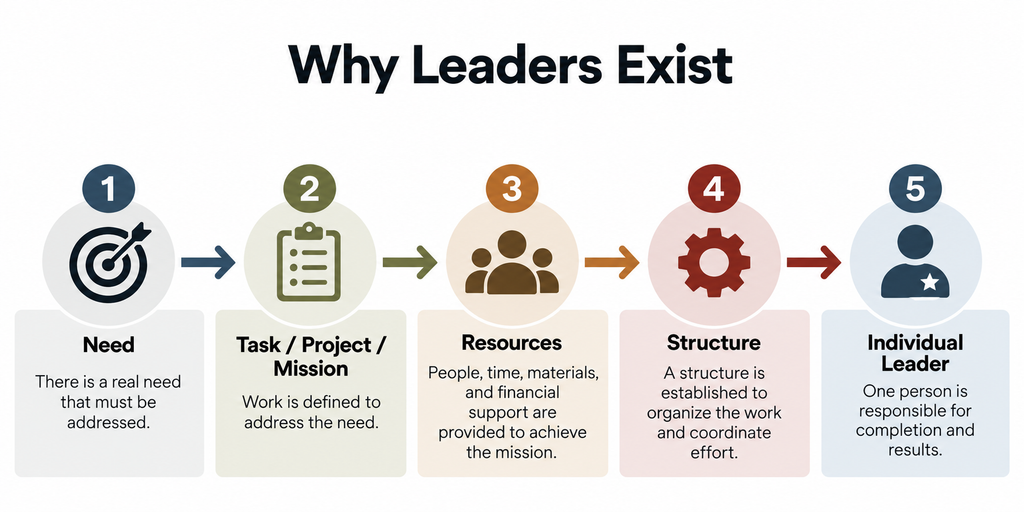
Every step up to final accountability for results can be handled by groups. I’d argue, though, that a group can’t be collectively held accountable for results, and the US criminal justice system generally agrees with me: it holds individuals, not groups, accountable. If you disagree, feel free to comment.
Because the leader owns that final accountability, the leader also owns the decisions that drive results. That’s where the three paths come in.
Three Paths to Results
Here are the three things leaders do to get results that address the need, depending on how each decision turns out:
- Make good decisions.
- If you make a bad decision and can undo it, do so.
- If your decision is bad and you can’t undo it, or undoing it makes it worse, learn from the experience and move on.
That’s really it. Now, obviously, the question is: how do you make a good decision? How do you know you made a bad one, and how do you undo it? At what point do you determine you can’t undo a bad decision without making it worse? How do you really move on?
Make Good Decisions
There are thousands of books on leadership that can help you learn to make good decisions. Nearly every one of them flows toward this conclusion or one of the other two. Years of experience and formal leader development have helped me succeed all these years, but boy have I made some bad decisions too. You’ll never arrive as a leader, and it helps a lot to have a lifelong-learner orientation like I do.
Making good decisions saves you from having to undo or mitigate bad ones. Here are a few pointers from the hundreds, maybe thousands, of considerations on your journey to making good decisions:
- Use a legal/moral/ethical lens, always. Never intentionally decide or do something that might be illegal, immoral, or unethical. You will lose the high ground you’ve gained with your team, and you give them implicit approval to follow suit.
- Remember the human dimension of your choice. If the decision meant to address the core need will negatively affect your team or individuals on it, strongly consider other options. Sometimes tough decisions made to achieve results set by the powers that be will hurt the team or individuals. A classic example is layoffs as a means to reduce expenses quickly. At least know the gravity of your decision for others, and stay professional through the process.
- Use data, tools, and industry-accepted processes. As you gain experience, find or develop processes that reduce or eliminate the impact of variables that aren’t essential to the decision. My theory: good clinicians start with a strong foundation in science and move toward the art of medicine as they gain experience. But we administrators almost always start as “natural” leaders and, as we gain experience, move toward the science of leadership. Talk to any CEO who gets consistent, quality results, and ask for their secret. You’re likely to get an impassioned speech about data-driven decision-making.
If You Make a Bad Decision and Can Undo It, Do So
I’ve seen too many leaders trip up by sticking with a bad decision that could have been undone. You can recover from an occasional bad decision, but not from making them consistently. Let’s talk about how to undo one gracefully, and maybe even gain credibility in the process (unless you keep making mistakes, of course!).
- Reverse it quickly and cleanly. Every day a reversible bad decision stays in place, the cost grows and your team’s patience shrinks. Identify what it takes to undo it, communicate the change clearly, and act.
- Take ownership. Honestly, everyone knows it was a bad decision, and they know you made it. The military has a couple of great sayings about this: “The maximum effective range of an excuse is zero.” And, “Everything that happens, or fails to happen, in your unit is on you.” Blaming conditions, bad guidance from above, or, worst of all, your people sends two immediate messages: you’re willing to play the victim, and you lack the perspective to earn trust from those around you. Playing the victim as the person in charge erodes the sense of your competence, and lacking perspective as the person responsible is the quickest way to lose both trust and credibility. (Read Jocko Willink and Leif Babin’s book Extreme Ownership. It’s a classic.)
- Explain yourself, without making excuses. Sometimes it’s appropriate to share what led up to the bad decision, especially with your immediate team. If this feels too raw, consider it an exercise in teaching the leaders who work for you how to avoid a similar bad decision in the future. Be careful, though. Explaining yourself can come across as making excuses, which puts you back in victim mode in people’s eyes.
If Your Decision Is Bad and You Can’t Undo It, Learn From It and Move On
Ignoring this tenet falls into the “the more you tell me to trust you, the less I do” category. We all make mistakes. Some are bigger than others, but regardless of size, if you can’t undo it, you eventually need to move on. Learn from it, then let it go.
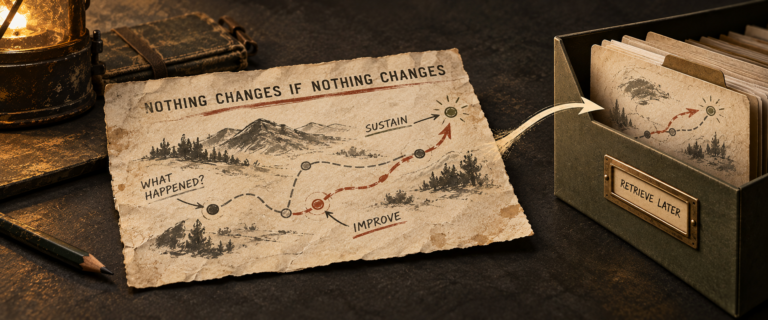
- Analyze and archive. Learn from the mistake through formal analysis of why it happened. Brainstorm ways to avoid making that decision, or one like it, again. Look for ways to mitigate the aftermath of the poor decision you can’t undo. Store all of it in an archive or database you can easily reference later.
- Move on. You will cripple your ability to take acceptable risk as a leader if you dwell on your mistakes. Don’t refer back to the bad decision after you’ve done your analysis and archive unless you must. Bringing it up repeatedly, even with sincere remorse, isn’t humility, and it can be seen as an attempt to fish for sympathy or verbal assurances that you’re still an awesome leader. By the way: authentic humility isn’t thinking less of yourself but thinking of yourself less.
Simple, Not Easy
That’s it. Make good decisions. If you make a bad decision, undo it. If you can’t undo it, learn from it and move on. It takes a moment to understand, but you’ll never master it, because you will make bad decisions as long as you lead others. The trick is reducing or eliminating the upfront variables that lead to poor decision-making. Avoid making the same mistake twice. Own it, learn from it, and get back in the fight.
What’s your experience? Do you agree that a group can’t be held accountable for results, or have you seen it work? Share your thoughts in the comments.